
Irene Golden was born on the VA Dayton campus grounds in 1919, when the site was still the Central Branch of the National Home for Disabled Volunteer Soldiers. Irene’s grandfather was a Civil War Veteran who lived at the National Home, and Irene’s father was a baker within the commissary department. For most of her childhood, Irene lived on the grounds in a staff apartment with her family, and she later attended nearby Roosevelt High School on Third Street. After graduating, Irene started working in the canteen on campus. There she met her first husband, a pipefitter for VA. She met her second husband some years later, a man who worked as a VA nurse for over 30 years. Irene may seem like a relatively obscure employee, but there is more to her story. She was locally famous for holding the record for the most sequential attendances at the Dayton VA Memorial Day parade.

As a child living on a National Home campus, Irene attended her first Memorial Day parade in 1920. She would not miss a single parade for 85 years and would develop a somewhat celebrity status among the Veterans at VA. Somewhere along the way, she was designated as the honorary grand marshal of the parade. She proudly held that title for over 30 years. Irene was welcomed by VA Medical Center staff and always given a space front and center as the leader of the parade. She also always made a point to visit her grandfather Samuel Pierce’s gravesite in the national cemetery, often touching the stone in an act of reverence.
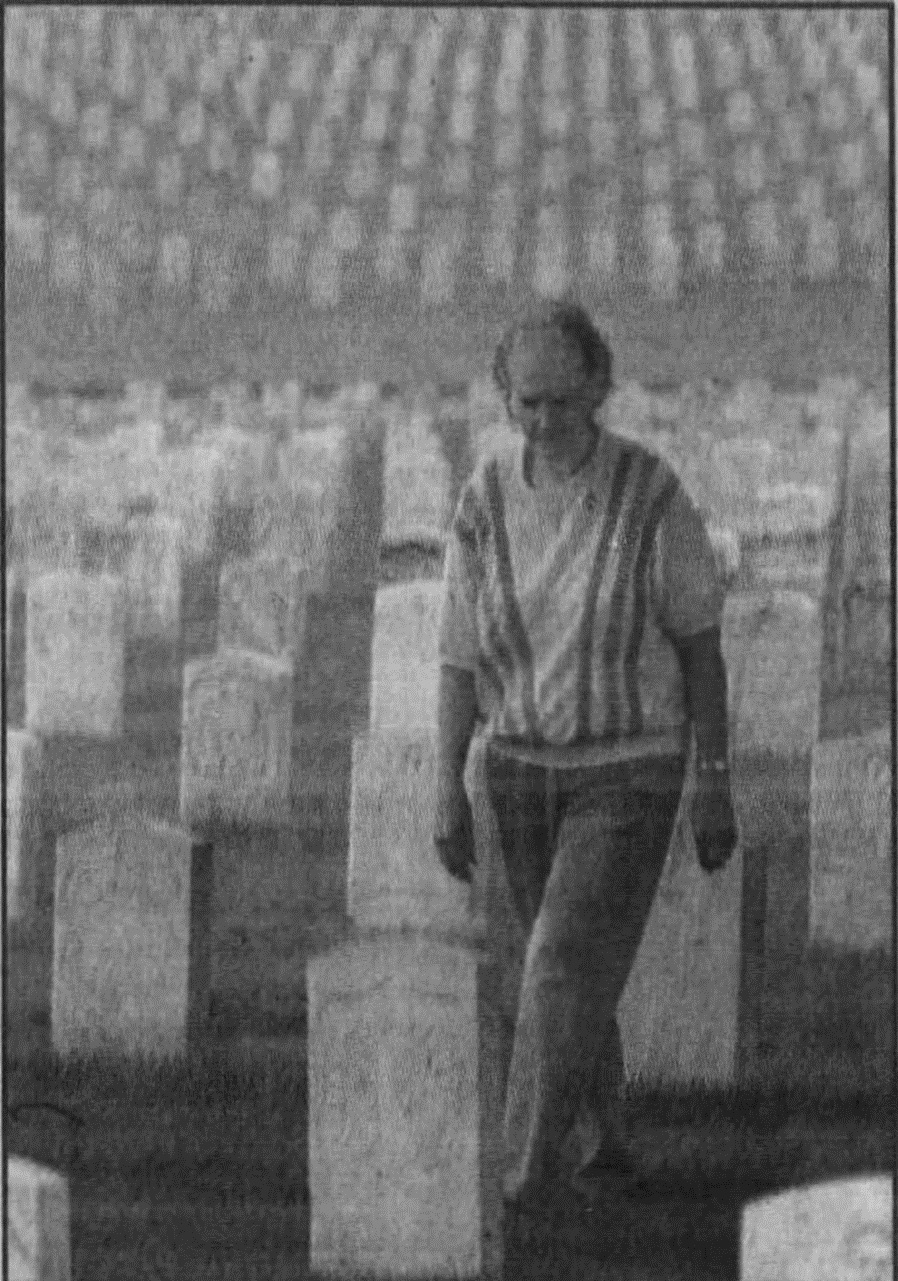
Irene saw Memorial Day celebrations at VA’s Dayton campus change over her 85 years of attendance. The Memorial Day parades drew many celebrities and government officials. Sometime in the late 1920s or early 1930s, Irene remembers meeting famed aviator Charles Lindbergh at the parade, even shaking his hand. Guest speakers over the years ranged from Ohio state senators and representatives to major military leaders. Throughout the 1940s, Civil War Veterans were a staple at Memorial Day events, telling stories and remembering their brothers in arms.

The 1950s and 1960s saw a slight decline in the size of the parade, although there were still local groups who came to honor the nation’s fallen. Many of these local groups, such as the Veterans of Foreign Wars and the American Legion, participated in the parades, sometimes driving vehicles but often marching as a group to the Soldiers’ Monument in the Dayton National Cemetery. There they would stop and listen to the guest speaker of the day, before taking time among the headstones to pay their respects.

The 1990s and 2000s brought changes in the Memorial Day celebrations at VA’s Dayton campus. As the average age of the Veterans rose, the size of the parade diminished. Even so, Irene was still faithfully attending each year’s Memorial Day events. Irene told Dayton Daily News Reporter Dale Huffman that she felt “married to the home” and that she would attend as long as she could. In the mid-2000s, Irene reminisced about how the parade used to feature several local high school bands and many Veterans. Despite the parade not being what it used to be, she was still proud to participate and to visit her friends and family members buried in the national cemetery at the end of the parade route.

Irene passed away in 2006 at age 87, taking with her an 85-year commitment to the Veterans she considered her friends. Today’s Memorial Day events no longer include a parade, but the Dayton VA campus, and national cemeteries across the country, still hold special Memorial Day events every year to honor those Veterans who now lay in their eternal rest.

Share this story
Related Stories

Curator Corner
The Underground Tunnel of Death: A Curator Corner Halloween Story
“The Underground Tunnel of Death” is a spooky name. However, it represents a unique story in VA history and the commitment to perpetual care by NCA. Dive into the unique history of the Dayton VA’s Funeral Tunnel and learn how soon you will be able to travel through the tunnel too.
Curator Corner
The Veterans Curation Program at the National VA History Center
In June 2004, U.S. Army Corps of Engineers (USACE) archaeologist Dr. Michael “Sonny” Trimble led a team investigating nine separate mass graves in Iraq thought to contain victims of Saddam Hussein’s regime. Working closely with forensic experts and military personnel, Dr. Trimble’s crew recovered scientific evidence used to convict Hussein of crimes against humanity. Following the extreme recovery mission and conclusion of the trial, the experience inspired a program that has benefited hundreds of U.S. Veterans across the country.
Curator Corner
From the Curator: VAMP with the Assist
As Christmas approaches, we find ourselves thinking about the VA Museum Program (VAMP) and its role in assisting VA facilities by providing technical support to manage their historical collections. Recently, we've been involved in projects like the Tuskegee VA Medical Center's mini-museum renovation and preparations for the United States' 250th anniversary celebrations in 2026.