
Long-time advocate for books and reading, she served 34 years in VA system
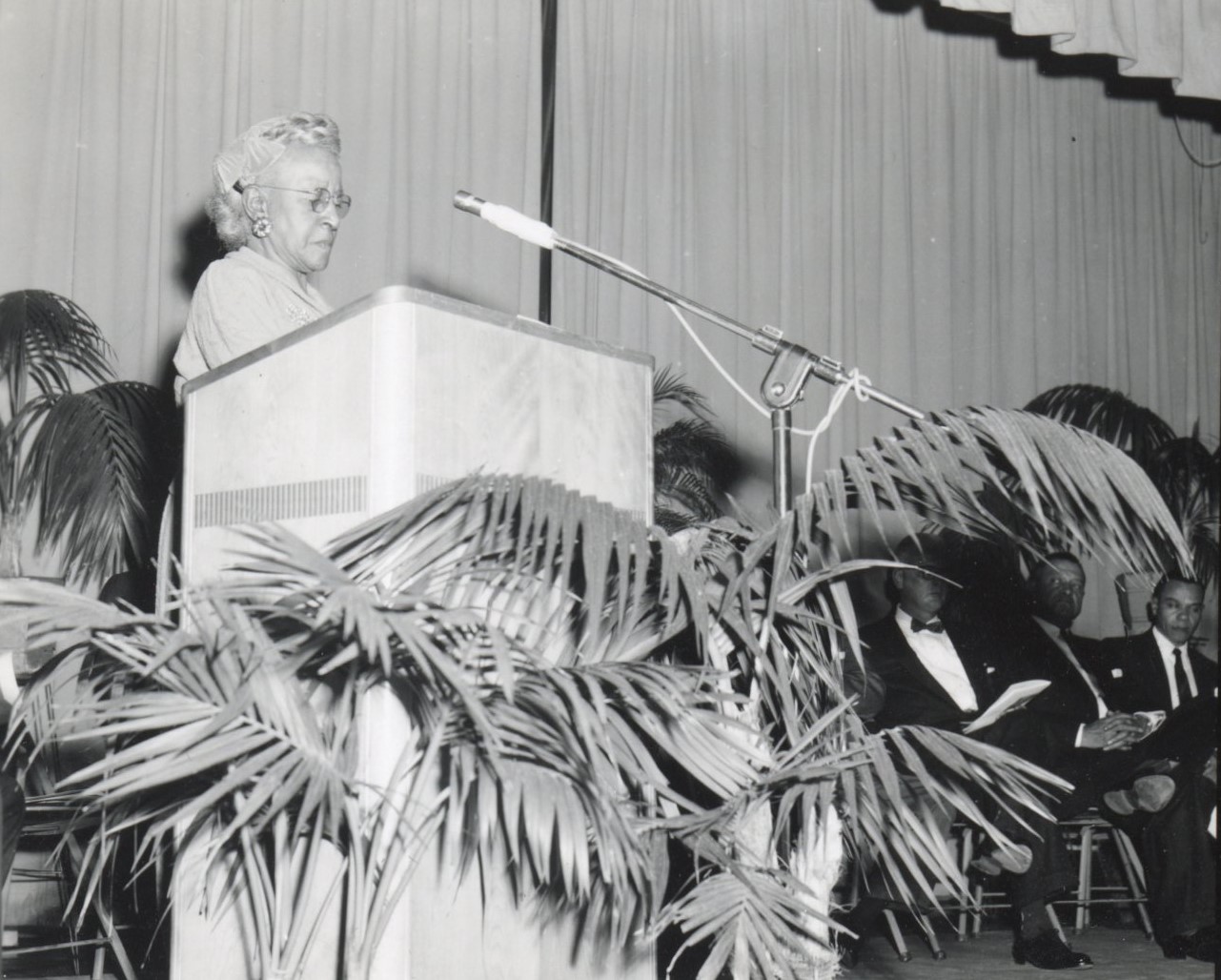
Dr. Sara (Sadie) Marie Johnson Peterson Delaney was a trailblazer in promoting libraries and literacy – and worked at what would eventually become today’s VA. She was the Chief Librarian of the VA hospital in Tuskegee, Alabama, for 34 years.
Delaney started her librarian career at the New York Public Library. Working with people who were visually impaired, she learned Braille and Moonprint – a system of embossed reading.
She took that knowledge to Tuskegee and worked to make the library part of the healing for the Veterans there. She noted in a medical bulletin, “The fact is well established that there is therapeutic value in books.”
Delaney added magazines, newspapers and encyclopedias to the library collection and started monthly book talks. She introduced a weekly story hour in the mental health ward. As there were no appropriate reading choices for Veterans struggling with mental illness, she borrowed fairy tales from the Tuskegee Institute.
As a “Negro” hospital, Delaney worked to bring relevant news to the Veterans living there. She wrote:
“It is quite natural that any group so isolated should be constantly waiting for news from the outside world about their own. Books that mention the Negro are of interest and enthusiasm is displayed when the book mentions, favorable or unfavorable, the Negro.”
Wanting to increase literacy, Delaney founded the Disabled Veterans’ Literary Society. Black Veterans not only had to navigate the aftermath of war, they had to overcome racial prejudice that prevented their learning. The library became their means to overcome it.
Eleanor Roosevelt spoke of Delaney in her news column.
Her work paid off. Tuskegee was the only Veterans hospital library with a group promoting literacy. The caliber of reading there was higher than any other Veterans hospital.
In her 34 years of service, Delaney established:
- Disabled Veterans’ Literary Society in 1924
- Bibliotherapy Unit in 1933
- The Library Press Club in 1930
- Library Debate Club in 1934
- Nature Study Group in 1938
- Philatelic Club in 1935
- Numismatics Club in 1935
- Historical Forum in 1939.
In 1934, she used her New York experience to start a special library department for the visually impaired, and taught Braille to over 600 patients. In turn, some of her students taught the system to others.
A letter Delaney received from a visually impaired psychologist expressing his gratitude shows the effect she had for her Veterans and in the world.
“You, a Negro woman of the South, helped me to know that skin color and creed are not important, but that the fundamentals of human beings are the same the world over.”
Share this story
Related Stories

Featured Stories
From Double Agent to Veteran Advocate: The Remarkable Journey of Caleb Bruen
In 1959, Revolutionary War soldier Caleb Bruen was lying at rest in the cemetery of the First Presbyterian Church (also known as the Old Presbyterian Church) in Newark, New Jersey. However, his resting place was facing a disturbance. According to reporting at that time by Nat Brandt in Newark’s Star-Ledger newspaper, church leadership was planning to convert the historic Broad Street cemetery into a parking lot, and reinter those resting there in a new mass plot.
Featured Stories
Veterans’ Horticultural Pursuits at the Dayton National Home for Disabled Volunteer Soldiers
Veterans living at the Dayton, Ohio, National Home for Disabled Volunteer Soldiers (NHDVS) played an integral role in beautifying the 578-acre campus. Veterans reaped benefits from working on the land including improved physical and mental health, social cohesion, and occupational skills. Most importantly, tending gardens provided Veterans with a sense of purpose and pride for enhancing their facility’s appearance.
Featured Stories
The 3rd Massachusetts Cavalry Monument in the Year of the Fire Horse
In the southwest quadrant of Winchester National Cemetery, located in the town of the same name in Virginia, sits an impressive monument to the 3rd Massachusetts Cavalry that pays tribute to both man and beast. The monument is adorned with a bas-relief of a horse’s head, wild-eyed and straining at its bridle. As February 2026 marked the start of the Lunar New Year and the Year of the Horse, this is an opportune time to explore the history of the regiment and its monument. According to Chinese astrology, the horse is hard-working, agreeable, and courageous, although it also chafes at being controlled by others, something the men of the 3rd Massachusetts Cavalry experienced firsthand. Stated one soldier, “The taming of wild animals was something I did not dream of when I enlisted in '62.”