
This story is part of our series celebrating America’s 250th anniversary. Find more captivating stories from the VA History Office at Freedom 250.
In 2026, the United States will celebrate the 250th anniversary of its independence. While this will be the Department of Veterans Affairs’ first national milestone anniversary since becoming a cabinet-level department in 1989, its predecessor organizations, including the National Home for Disabled Volunteer Soldiers, the Pension Bureau, the Veterans Bureau, and the Veterans Administration, routinely participated in the nation’s previous milestone celebrations. Each served to honor the contributions of American Veterans in preserving our freedom.
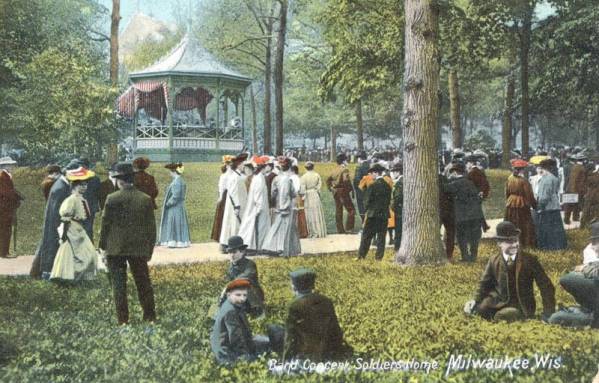
For the nation’s first centennial, thousands of Veterans celebrated the occasion at various branches of the National Home for Disabled Volunteer Soldiers. By 1876, the National Home had opened branches in Togus, Maine; Dayton, Ohio; Milwaukee, Wisconsin; and Hampton, Virginia. On the Fourth of July, the individual homes put on a series of events for both the Veterans in their care and the broader public.
The soldiers’ home in Milwaukee hosted an array of field games, two concerts by the Home Band, dancing, and a fireworks display.[1] Similar festivities took place at the soldiers’ home in Dayton, where 60,000 visitors traveled to celebrate the Fourth.[2] The day’s activities concluded with a “grand illumination” of approximately 18,000 tin lamps and numerous candles placed throughout the entirety of the grounds.[3] Spectators regarded it as the “finest [illumination] ever attempted in the West.”[4]
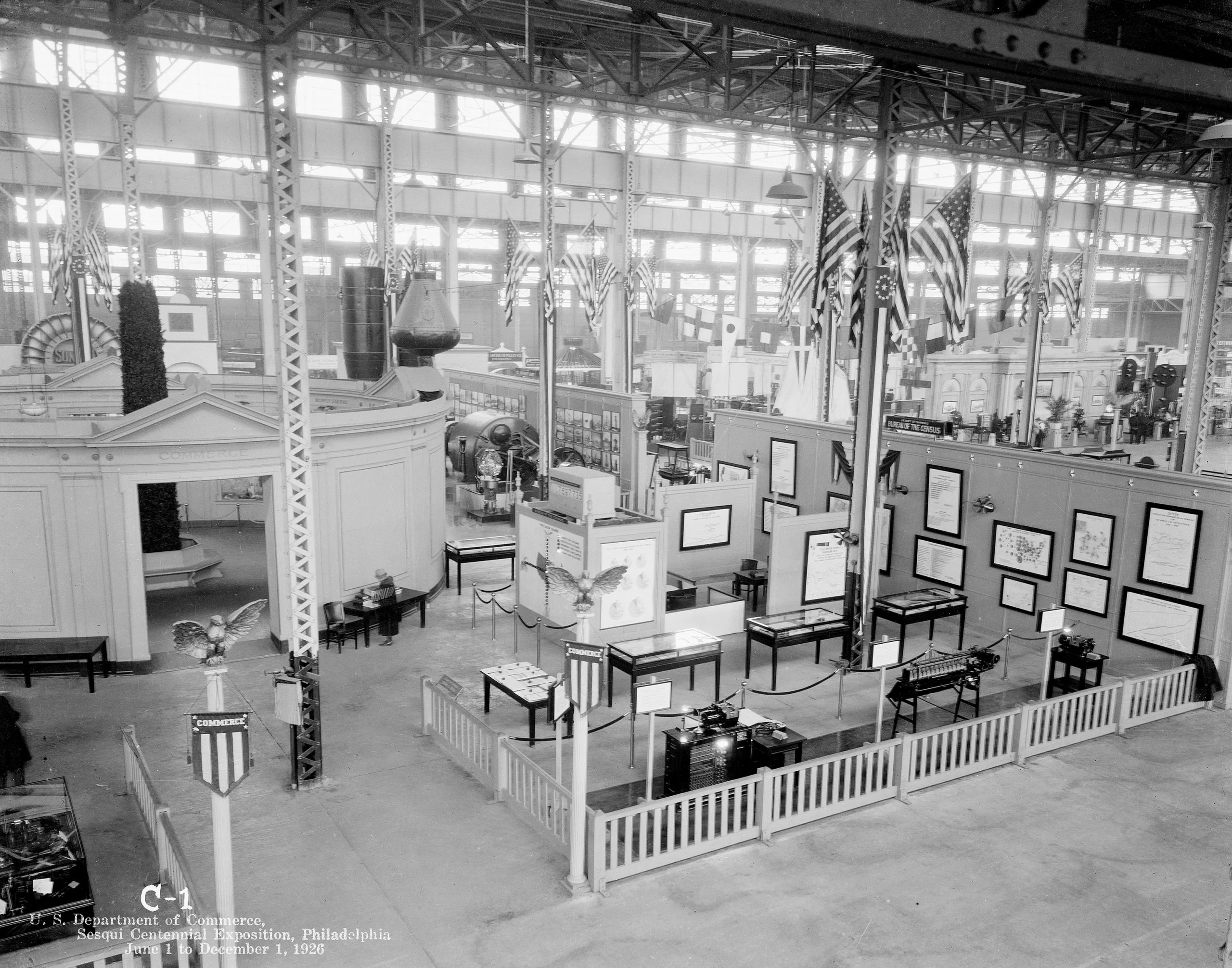
For the nation’s 150th anniversary in 1926, the Bureau of Pensions and the newly established Veterans Bureau each created exhibits for the Sesquicentennial International Exhibition in Philadelphia. The Veterans Bureau’s exhibit featured several hundred pieces of Veterans’ art, each of which were made by patients at Bureau hospitals. Accompanying the “strikingly illustrative” pieces was a series of case studies and charts demonstrating the available benefits Veterans could receive through the Bureau.[5]
Conversely, the Bureau of Pensions’ display highlighted the stories of those eligible for federal pensions, including the surviving widows of men who had served during the war of 1812. In their words, their exhibit served to “proclaim the nation’s gratitude for the suffering and sacrifice of the gallant soldiers and sailors who…cast their lives and fortunes on the altar of human freedom.”[6]
In 1930, the Pension Bureau, the Veterans Bureau, and the National Home for Disabled Volunteer Soldiers were combined to form the Veterans Administration. By the time of the nation’s bicentennial in 1976, VA was responsible for distributing benefits and medical care to over 29 million Veterans, or roughly 15% of the country’s population.
To give Veterans around the country the opportunity to participate, the agency’s Bicentennial Committee launched a national art contest for Veterans in VA hospitals, nursing homes, clinics, and other facilities. The theme of the contest, “Our Veterans: Defending America Over 200 Years,” encouraged participants to illustrate “the role Veterans have played over the past two centuries in protecting and preserving our nation’s ideals and freedoms.”[7]
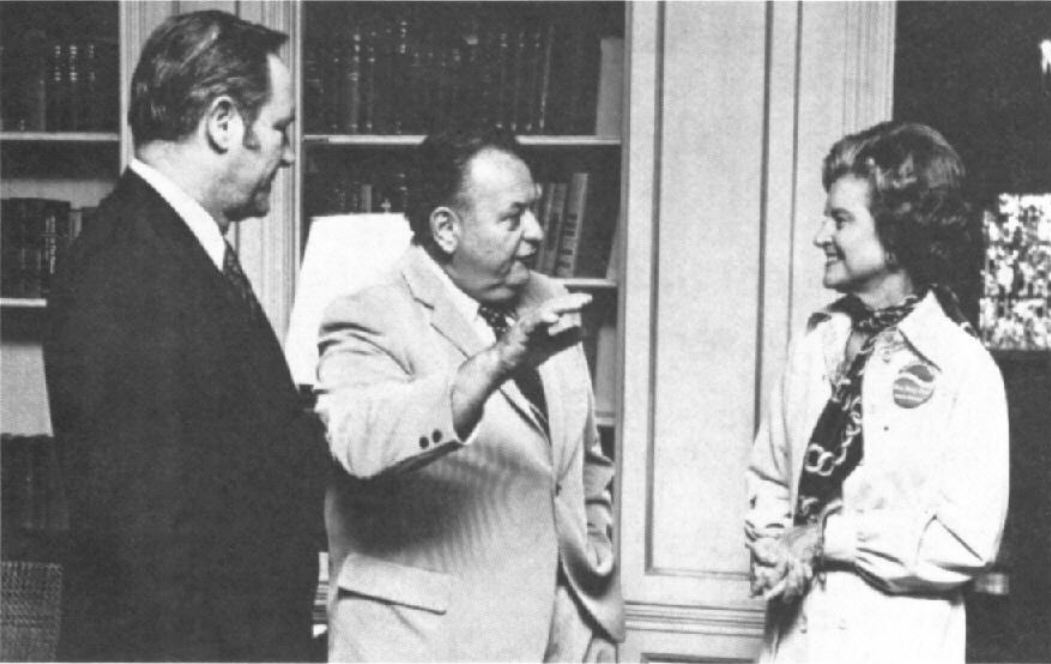
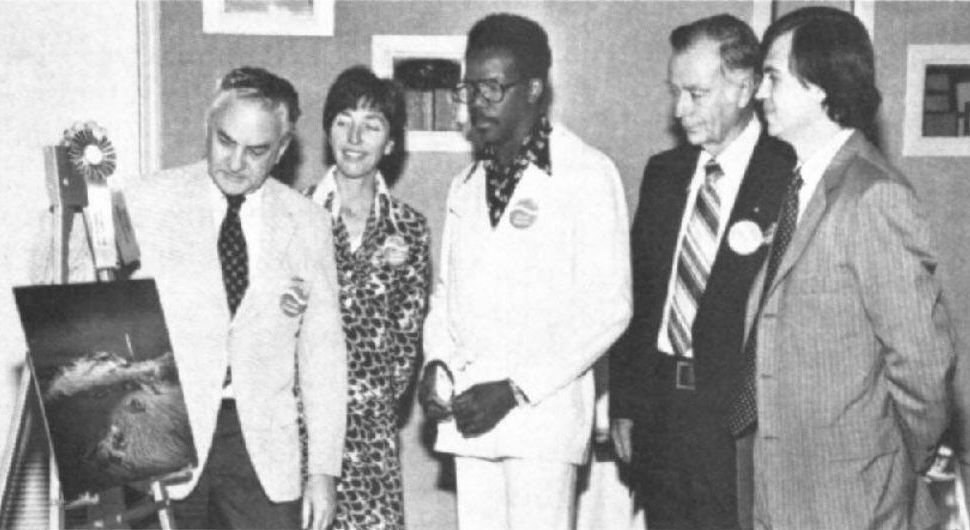
In total, VA received 121 entries from Veteran artists, with the top 21 entrants receiving a cash prize. First Lady Betty Ford, who served as the competition’s honorary chairwoman, viewed the winning entries at the White House. Ten of the winning paintings were also put on display in the lobby of the John F. Kennedy Center for the Performing Arts in Washington, D.C.[8]
Other bicentennial celebrations, contests, and displays took place at individual VA medical facilities throughout the nation. For example, patients at the local VA clinic in Knoxville, Iowa, planted 1,500 red, white and blue petunias to form the shape of the Liberty Bell and the numbers “76.”[9] In Augusta, Georgia, VA hospital employees put on a bicentennial-themed variety show for their patients, and received such acclaim that they were invited to perform at other celebrations in the area.[10]
Some former service members even incorporated centennial themes into their medical care. A disabled Veteran in Brockton, Massachusetts, created a Bennington flag as part of his rehabilitation treatment, while another VA patient in Pittsburgh, Pennsylvania, carved wooden models of VA’s bicentennial seal using the skills he learned in the hospital’s woodworking class. Other bicentennial activities included planting commemorative trees, creating floats for local parades, and burying time capsules.
Since 1876, national anniversary celebrations at VA and its predecessors have served to honor the contributions of servicemen and servicewomen in preserving our nation. VA looks forward to continuing this tradition during the nation’s semiquincentennial in 2026.
[1] “At the Soldier’s Home,” Daily Milwaukee News, July 4, 1876.
[2] “The Fourth was a Vast Success at the Soldiers’ Home,” Xenia Semi-Weekly Gazette (Xenia, OH), July 11, 1876.
[3] “The Centennial Fourth at the Soldiers’ Home,” Miami Helmet (Piqua, OH), July 20, 1876.
[4] “The Fourth was a Vast Success at the Soldiers’ Home.”
[5] E. L. Austin and Odell Hauser, The Sesqui-Centennial International Exposition: A Record Based on Official Data and Departmental Reports (Philadelphia: Current Publications, Inc., 1929), 119, https://www.google.com/books/edition/The_Sesqui_centennial_International_Expo/W4dAAAAAIAAJ?hl=en&gbpv=1&bsq=pensions.
[6] “Sesquicentennial Exhibit Featured Display of Veterans Programs,” VAnguard 22, no. 27 (June 29, 1976).
[7] “Bicentennial Art for Patients,” Bicentennial Bulletin 1, no. 2 (December 22, 1975), https://www.fordlibrarymuseum.gov/sites/default/files/pdf_documents/library/document/0067/1563282.pdf.
[8] “Winning Art at Kennedy Center,” VAnguard 22, no. 32 (September 7, 1976).
[9] “Knoxville Hospital Patients Grew a Bicentennial Bell in Living Color,” VAnguard 22, no. 32 (September 21, 1976).
[10] “Augusta Employees Mark Nation’s Birth,” VAnguard 22, no. 32 (September 7, 1976).
Share this story
Related Stories

Featured Stories
From Double Agent to Veteran Advocate: The Remarkable Journey of Caleb Bruen
In 1959, Revolutionary War soldier Caleb Bruen was lying at rest in the cemetery of the First Presbyterian Church (also known as the Old Presbyterian Church) in Newark, New Jersey. However, his resting place was facing a disturbance. According to reporting at that time by Nat Brandt in Newark’s Star-Ledger newspaper, church leadership was planning to convert the historic Broad Street cemetery into a parking lot, and reinter those resting there in a new mass plot.
Featured Stories
Veterans’ Horticultural Pursuits at the Dayton National Home for Disabled Volunteer Soldiers
Veterans living at the Dayton, Ohio, National Home for Disabled Volunteer Soldiers (NHDVS) played an integral role in beautifying the 578-acre campus. Veterans reaped benefits from working on the land including improved physical and mental health, social cohesion, and occupational skills. Most importantly, tending gardens provided Veterans with a sense of purpose and pride for enhancing their facility’s appearance.
Featured Stories
The 3rd Massachusetts Cavalry Monument in the Year of the Fire Horse
In the southwest quadrant of Winchester National Cemetery, located in the town of the same name in Virginia, sits an impressive monument to the 3rd Massachusetts Cavalry that pays tribute to both man and beast. The monument is adorned with a bas-relief of a horse’s head, wild-eyed and straining at its bridle. As February 2026 marked the start of the Lunar New Year and the Year of the Horse, this is an opportune time to explore the history of the regiment and its monument. According to Chinese astrology, the horse is hard-working, agreeable, and courageous, although it also chafes at being controlled by others, something the men of the 3rd Massachusetts Cavalry experienced firsthand. Stated one soldier, “The taming of wild animals was something I did not dream of when I enlisted in '62.”