
World War I brought about new types of injuries caused by modern, mechanized warfare, such as those from machine guns, poison gas and heavy artillery. At the same time, it acted as a driving force for advancements in medical practices, public health and the professionalization of research methodologies. Following the war, with a dramatic increase in the number of Veterans—roughly 150,000 more than before—there was a growing recognition of the need for medical research to improve care for these individuals.
In 1923 President Warren G. Harding and the Veterans Bureau’s first administrator, Charles Forbes, created a medical council to survey the state of Veteran care and propose a modern hospital network. The following year, the council made key recommendations, including the creation of a research program, the appointment of a director of research, and the publication of a medical bulletin. The council emphasized the need for statistical studies, standardized procedures, and clinical research focused on conditions affecting Veterans. The idea of integrating research approaches into Veteran hospital systems was adapted from practices already in place at U.S. Public Health Service Hospitals, 50 of which the Bureau absorbed into its new hospital network.
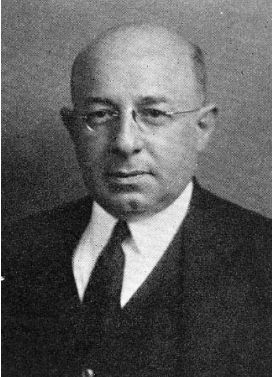
To lead this major research expansion, the Bureau looked to Dr. Philip Matz, who was appointed as director of research in September 1925. Matz, a Baltimore-born pathologist, graduated from the Long Island College of Medicine in 1908. He began his career as a laboratory chief at the Leavenworth Branch of the National Home for Disabled Volunteer Soldiers. During World War I, he served as chief of the laboratory service at the Camp Travis, Texas, base hospital. After the war, he continued his laboratory work with the Public Health Service.
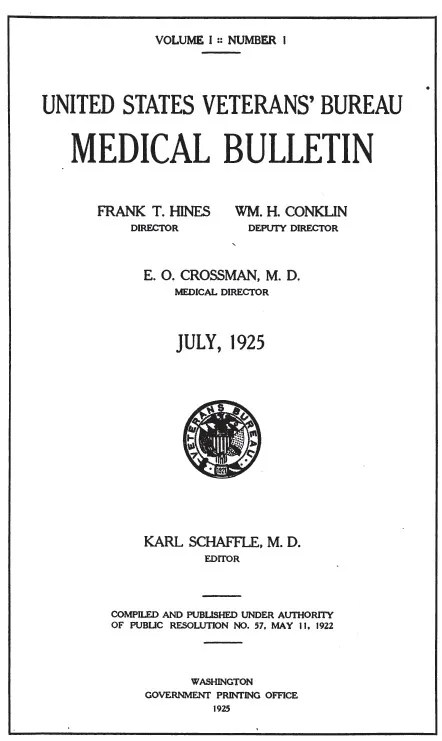
In his new role at the Veterans Bureau, Matz directed clinical research in hospitals and outpatient facilities, ensuring that studies directly contributed to improving Veteran treatment. Matz also oversaw the creation of three laboratory research centers at hospitals in Palo Alto, California; Washington, D.C.; and Maywood, Illinois, in early 1926.
He also played a crucial role in publishing the Medical Bulletin, a monthly medical journal featuring articles from Bureau physicians and staff designed to share case studies, promising treatments and other reports based on their extensive experience with patients in Veterans’ hospitals.
Beyond his administrative duties, Matz conducted research himself. In 1926, he analyzed cardiovascular disease, tuberculosis, cancer, and neuropsychiatric conditions among Veterans, comparing their rates to civilian populations. His work contributed to landmark publications, including a New England Journal of Medicine study on cardiovascular disease incidence in Veterans and a 1938 Journal of the American Medical Association report revealing that 50 percent of Veterans suffered from neuropsychiatric disorders.
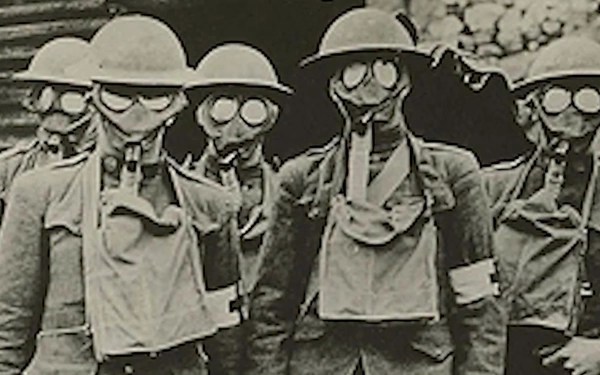
In perhaps his most widely known study, Matz collaborated with Dr. H.L. Gilchrist, medical director of the Army’s Chemical Warfare Service, to study Veterans exposed to poison gas during World War I. Their research identified chronic bronchitis with asthma-like symptoms as a common aftereffect but found no increased risk of tuberculosis among those exposed, contrary to what some physicians perceived at the time.
Underscoring his work, Dr. Matz believed that Veteran medical research should have a direct impact on patient care. In 1926, he articulated his vision: “It must be clearly understood at the outset that research work in our service must show that upon consummation it will result in the betterment of the treatment of the beneficiary. It is not within the province of the Veterans’ Bureau to carry on research work of a purely academic character; there are other governmental agencies for this line of endeavor. Ours must be research based on practicability. Our research work must eventually result in larger percentages of recoveries and reduced mortality rates of the beneficiaries of the United States Veterans’ Bureau.”[1]
Matz passed away suddenly at the age of 53 while on a nationwide tour of Veteran Administration hospitals in 1938. The void left by his death coupled with the onset of World War II resulted in no new major Veteran research initiatives until the 1950s.
Dr. Philip Matz’s pioneering work laid the groundwork for the modern VA research program. His emphasis on data-driven, patient-focused studies set a standard that continues to shape Veteran healthcare research today.
Sources
Annual Report of the Director, United States Veterans’ Bureau for the Fiscal Year Ended 1926.
Hayes, Marguerite. A Historical Look at the Department of Veterans Affairs Research and Development Program. Washington, D.C.: Government Printing Office, 2010.
Matz, Philip, and H.L. Gilchrist. The Residual Effects of Warfare Gases. Washington, D.C.: Government Printing Office, 1933.
Rories, Katie and Jeff Seiken. “Object 22: United States Veterans’ Bureau Medical Bulletin.” February 4, 2025. https://department.va.gov/history/100-objects/object-22-medical-bulletin/.
Footnotes
[1]Marguerite Hayes, A Historical Look at the Department of Veterans Affairs Research and Development Program (Washington, D.C.: Government Printing Office, 2010), 27.
Share this story
Related Stories

Featured Stories
From Double Agent to Veteran Advocate: The Remarkable Journey of Caleb Bruen
In 1959, Revolutionary War soldier Caleb Bruen was lying at rest in the cemetery of the First Presbyterian Church (also known as the Old Presbyterian Church) in Newark, New Jersey. However, his resting place was facing a disturbance. According to reporting at that time by Nat Brandt in Newark’s Star-Ledger newspaper, church leadership was planning to convert the historic Broad Street cemetery into a parking lot, and reinter those resting there in a new mass plot.
Featured Stories
Veterans’ Horticultural Pursuits at the Dayton National Home for Disabled Volunteer Soldiers
Veterans living at the Dayton, Ohio, National Home for Disabled Volunteer Soldiers (NHDVS) played an integral role in beautifying the 578-acre campus. Veterans reaped benefits from working on the land including improved physical and mental health, social cohesion, and occupational skills. Most importantly, tending gardens provided Veterans with a sense of purpose and pride for enhancing their facility’s appearance.
Featured Stories
The 3rd Massachusetts Cavalry Monument in the Year of the Fire Horse
In the southwest quadrant of Winchester National Cemetery, located in the town of the same name in Virginia, sits an impressive monument to the 3rd Massachusetts Cavalry that pays tribute to both man and beast. The monument is adorned with a bas-relief of a horse’s head, wild-eyed and straining at its bridle. As February 2026 marked the start of the Lunar New Year and the Year of the Horse, this is an opportune time to explore the history of the regiment and its monument. According to Chinese astrology, the horse is hard-working, agreeable, and courageous, although it also chafes at being controlled by others, something the men of the 3rd Massachusetts Cavalry experienced firsthand. Stated one soldier, “The taming of wild animals was something I did not dream of when I enlisted in '62.”