
In December 1941, the United States entered the World War II following the bombing of Pearl Harbor.
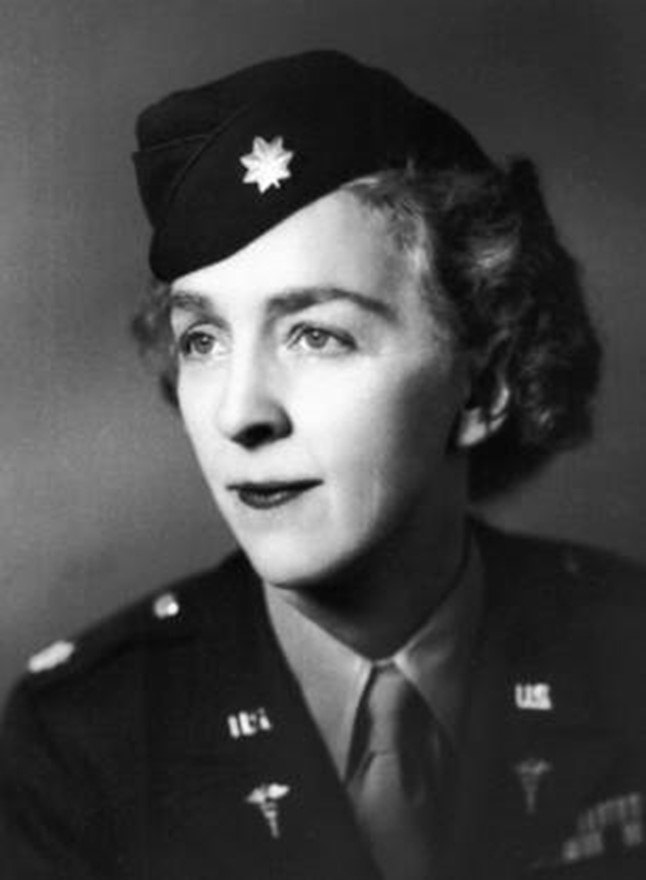
Women across the country signed on to help the war effort just as they had done during the First World War. One of these women was Dr. Margaret Craighill, who relinquished her duties as dean of the Woman’s Medical College of Pennsylvania in Philadelphia to pursue military service.
Craighill was the first woman doctor to receive a military commission. She was responsible for inspecting the “field conditions of all women in the United States Army.”
She also was the women’s consultant to the Surgeon General of the Army. In that role, Craighill was in charge of the Women’s Health and Welfare Unit. She also created the standards for the process of WAC medical care.
First consultant on female Veterans’ medical care
Following the conclusion of World War II, Craighill became one of the first consultants on female Veterans’ medical care at VA, a post she was referred to by General Omar Bradley. In this new position, she worked alongside other specialists in VA hospitals.
One newspaper story mentioned that Craighill’s promotion was “probably the most marked distinction that the war has brought any woman doctor in this country.” This historic appointment was the first position of its kind in VA.
Her time as chief consultant on medical care for women Veterans was formative for women in medicine as she advocated for the expansion of female doctors in the then-known Veterans Administration hospitals. In November 1946, the first ten women doctors were hired to serve alongside her.
Ensured female Veteran care at highest possible standards
Serving with Craighill, these 10 trailblazing women were familiar with women’s issues, especially those encountered by female Veterans. The women doctors were selected to ensure the care of women Veterans in VA hospitals and homes across the country was always kept at the highest possible standards. In a letter to one of her female colleagues, Craighill modestly described her mission as giving “some suggestions on the care of women patients.”
She went on to write that it was a job she felt compelled to do after her experience at war.
Always invested in women’s issues, Dr. Craighill helped in the development of VA policies on the status of women. In 1951, this would become the Defense Advisory Committee on Women in the Services.
In July 1977, Craighill, 78, died in her home at Heritage Village, Southbury, Connecticut. Her medical career and dedication to military service are a testament to her distinguished character.
Craighill’s legacy lives on today with VA maintaining a department to serve the nation’s female Veterans. Her legacy has also paved the way for future female medical professionals to serve at the highest levels of their profession.
Share this story
Related Stories

Featured Stories
From Double Agent to Veteran Advocate: The Remarkable Journey of Caleb Bruen
In 1959, Revolutionary War soldier Caleb Bruen was lying at rest in the cemetery of the First Presbyterian Church (also known as the Old Presbyterian Church) in Newark, New Jersey. However, his resting place was facing a disturbance. According to reporting at that time by Nat Brandt in Newark’s Star-Ledger newspaper, church leadership was planning to convert the historic Broad Street cemetery into a parking lot, and reinter those resting there in a new mass plot.
Featured Stories
Veterans’ Horticultural Pursuits at the Dayton National Home for Disabled Volunteer Soldiers
Veterans living at the Dayton, Ohio, National Home for Disabled Volunteer Soldiers (NHDVS) played an integral role in beautifying the 578-acre campus. Veterans reaped benefits from working on the land including improved physical and mental health, social cohesion, and occupational skills. Most importantly, tending gardens provided Veterans with a sense of purpose and pride for enhancing their facility’s appearance.
Featured Stories
The 3rd Massachusetts Cavalry Monument in the Year of the Fire Horse
In the southwest quadrant of Winchester National Cemetery, located in the town of the same name in Virginia, sits an impressive monument to the 3rd Massachusetts Cavalry that pays tribute to both man and beast. The monument is adorned with a bas-relief of a horse’s head, wild-eyed and straining at its bridle. As February 2026 marked the start of the Lunar New Year and the Year of the Horse, this is an opportune time to explore the history of the regiment and its monument. According to Chinese astrology, the horse is hard-working, agreeable, and courageous, although it also chafes at being controlled by others, something the men of the 3rd Massachusetts Cavalry experienced firsthand. Stated one soldier, “The taming of wild animals was something I did not dream of when I enlisted in '62.”