
The History of the Asheville Veteran’s Affairs Medical Center (VAMC) is a complex and fascinating one spanning over a century of care. Research continues to uncover connections, placing the people of this historic hospital site into better view. The latest of these discoveries involves a photograph, simply captioned: “Unidentified woman, half-length portrait, wearing nurses uniform.”
This photograph is part of a scrapbook at the University of North Carolina at Asheville, Ramsey Library Special Collection. The Mrs. Walter L. Massie Collection of Jesse Morris Photographs is the best resource for seeing what life was like at the Oteen Veteran’s Administration Hospital, the forerunner of today’s Asheville VAMC. Taken and assembled by one of the nurses at the hospital, the collection reveals what life was like at Oteen soon after World War I from a nurse’s point of view. However, like many archival finds, names and details are missing from the record for most of the images. Who was this unidentified woman? For the past five years, her identity has been unknown.
Research efforts included a chronological search of newspaper articles. That’s when a February 1919 Atlanta Constitutional story about the hospital helped reveal the nurse’s name. The article included images of the early Army Medical Detachment staff and there, was Head Nurse, Florence Standish.
Placing the two sources side by side, the photo from UNC’s collection was positively identified as Chief Nurse Florence Standish. Armed with a name, more research revealed that U.S. Army Hospital # 19’s first Chief Nurse, Florence Standish, had a remarkable life story.
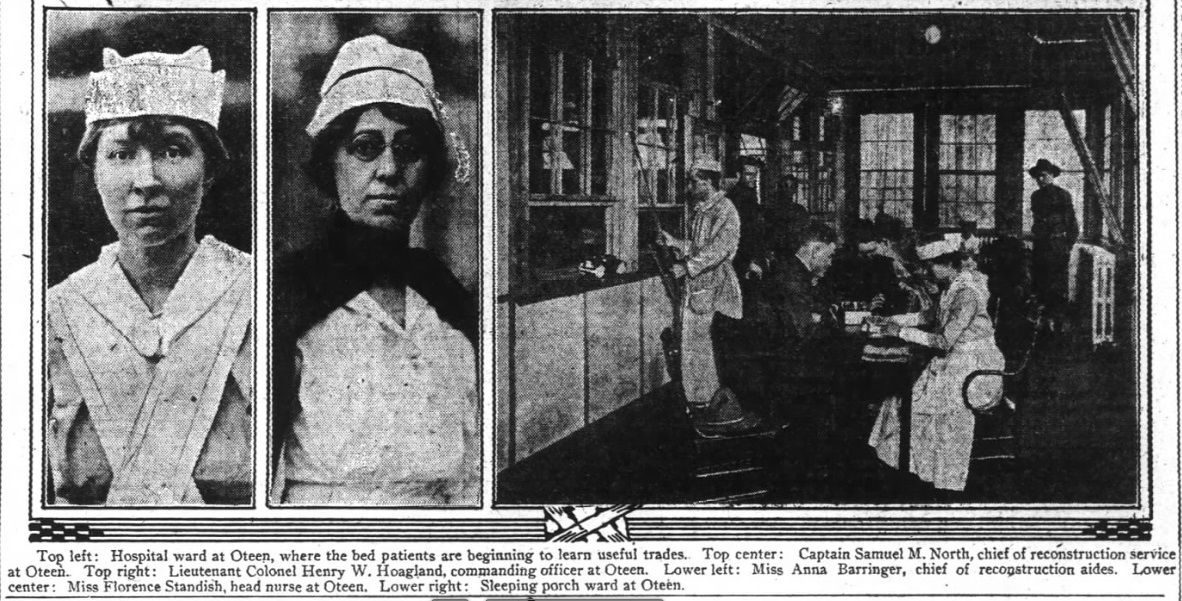
Florence was born in Wilkes-Barre, Pennsylvania in 1875. She attended a school for deaconesses in Washington, D.C. by 1901 and in June 1905, she graduated from the Alsbury Hospital Training School for Nurses in Minneapolis, Minnesota. She worked as an hourly nurse in Wilkes-Barre until September 1909, when she left to become the Nurse Superintendent of a new Methodist Deaconess Hospital in Colorado Springs, Colorado.
Col. Henry Hoagland met Ms. Standish in the years before World War I, and when he was named the First Medical Commanding Officer of Army Hospital #19, he hand selected her to be the Chief Nurse at his new post. Found in The Oteen, a post magazine, was a 1918 group photo showing all members of the Army Nurse Corps stationed at the hospital. Florence is seated in the second row, just left of the seam.

While her tenure at Oteen was brief, she made an impact. In an Asheville Citizen Times article about the departure of both Hoagland and Standish back to Colorado, it was reported that she “has been very active as head nurse… and become very popular with all her associates at the hospital and will leave a host of friends.” Upon returning to Colorado Springs, she opened her own Sanitorium for Tuberculosis Patients. According to 1920 federal census records, she was owner and proprietor of TB Sanitorium with her adopted son, Robert F. Standish.
Florence died in 1941 after a lifetime of nursing and helping others.
Visit the Colorado Springs History Museum’s website for more information on Nurse Standish and her work.
By Rodney S. Doty
Digital Library Technician, Medical Media and Photography Asheville VA Medical Center
Share this story
Related Stories
Featured Stories
A Brief History of the Board of Veterans’ Appeals
On July 28, 1933, President Franklin Delano Roosevelt signed Executive Order 6230 creating the Board of Veterans’ Appeals (BVA). The BVA was created as part of the Veterans Administration (VA), which had been established only three years earlier.
Featured Stories
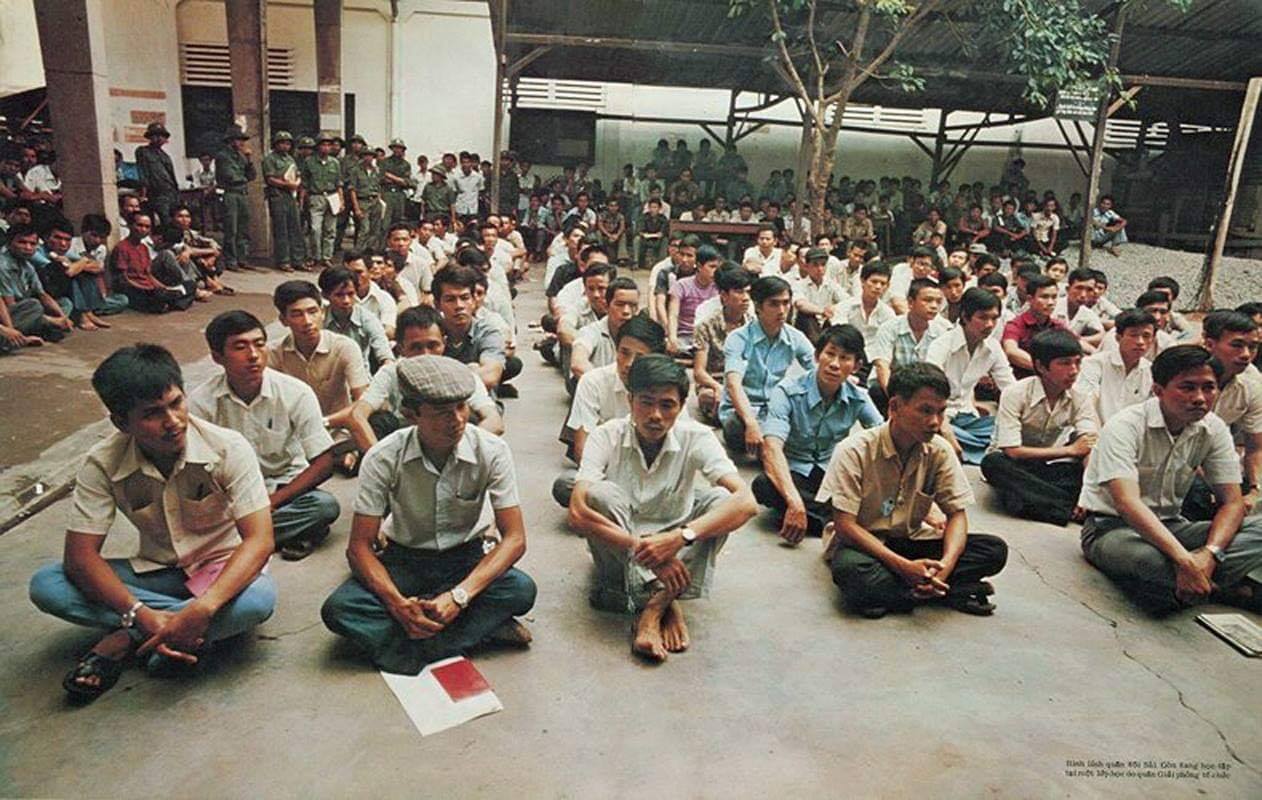
The Fall of Saigon 1975: A South Vietnamese Military Physician Remembers
"There was chaos in the streets when I made my way to the hospital on the morning of April 30, 1975. In a place of order, there was now great confusion. The director and vice director of the hospital were gone, making me, the chief of medicine, the highest-ranking medical officer."