
While renovations to the buildings that will become the permanent home of the National VA History Center await completion, the collecting of VA’s important historical records and artifacts has already begun. The building on the Dayton VA Medical Center campus that is serving as a temporary home to the History Center was originally a residence hall that housed primarily Civil War Veterans during the early decades of the 20th century. Like most aspects of the National Home for Disabled Volunteer Soldiers, commonly referred to as Soldiers Homes during those early years, the quarters were organized much like an army barracks, and the interior rooms were large open spaces outfitted with rows of beds, and each floor accommodated about 40 men.1
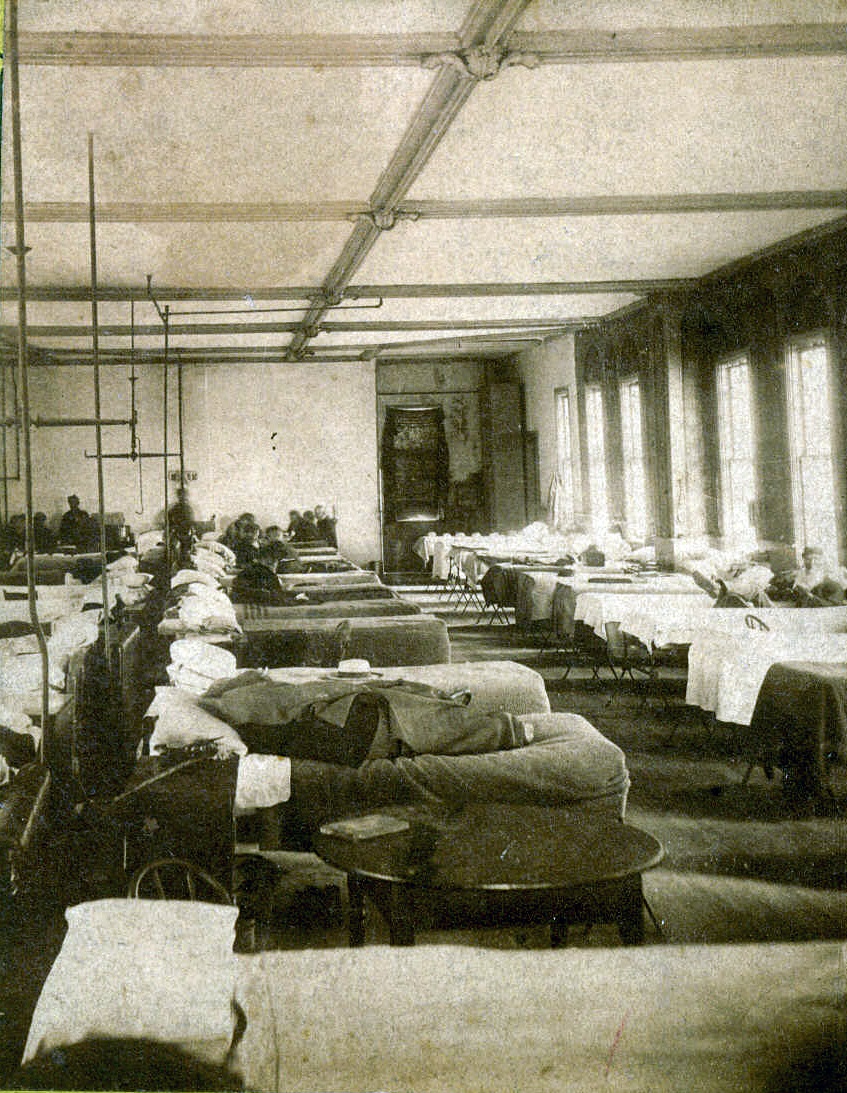
Today, these large rooms are where VA History Center staff receive, process, and house the many documents, images, media, and objects that tell the history of the Department of Veterans Affairs and its forerunner organizations. When the time came to place the first artifact into the newly established collections room, the staff knew that it should be something that represented the rich history of VA and the pioneering spirit of those people attempting to create a government organization for war Veterans on a scale that had never been attempted before.
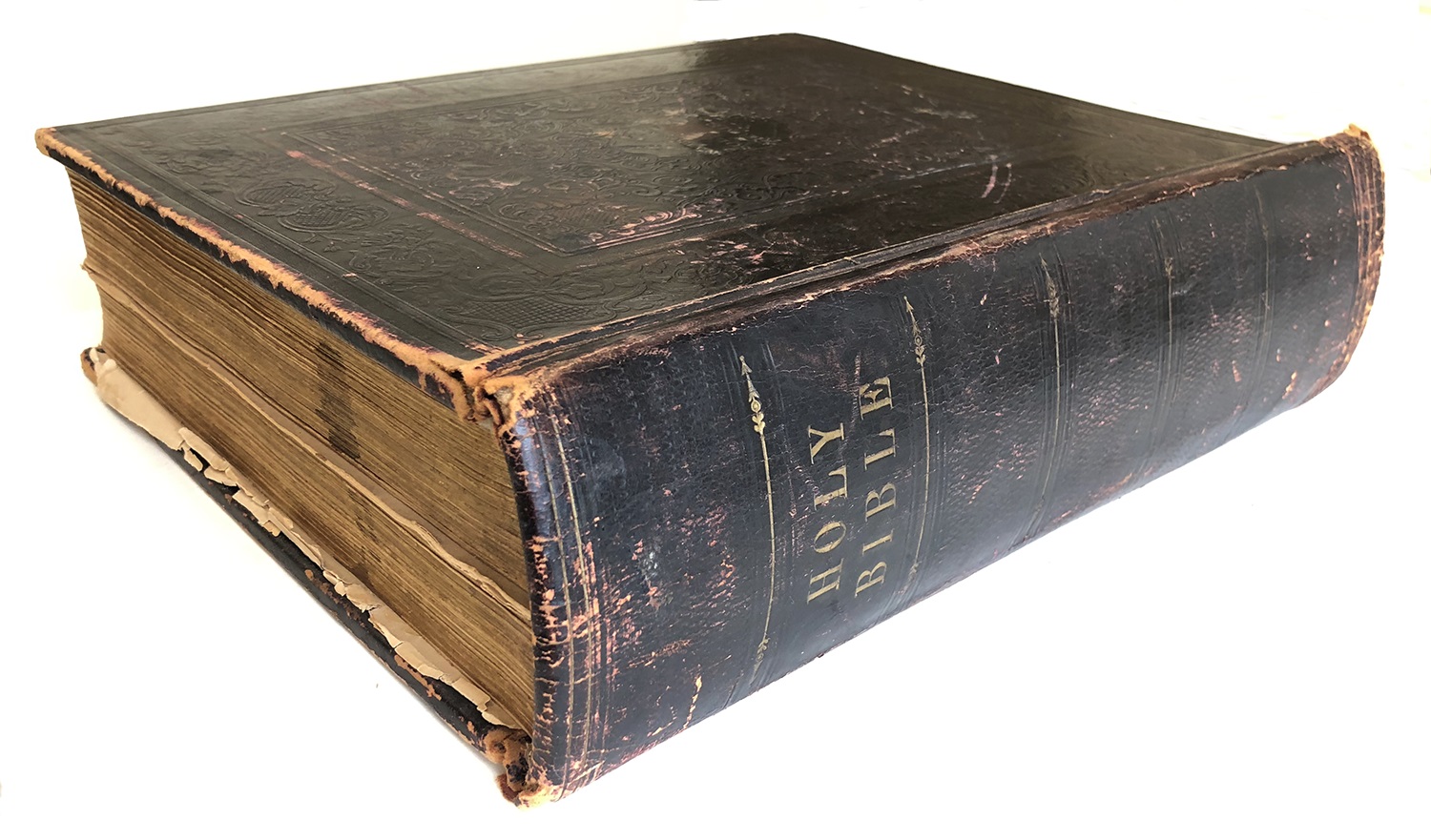
Because the Dayton VA Medical Center’s historic archives and artifacts were the first items to be moved into the new History Center, it was an easy decision to select an artifact from that collection for the honor. The item chosen was the pulpit bible from the first church built in the Soldiers Home system, appropriately named “Home Chapel.” The bible was officially placed into the National VA History Center’s collection by the current Director of the Dayton VA Medical Center, Mark Murdock, and VA’s Chief Historian Michael Visconage.
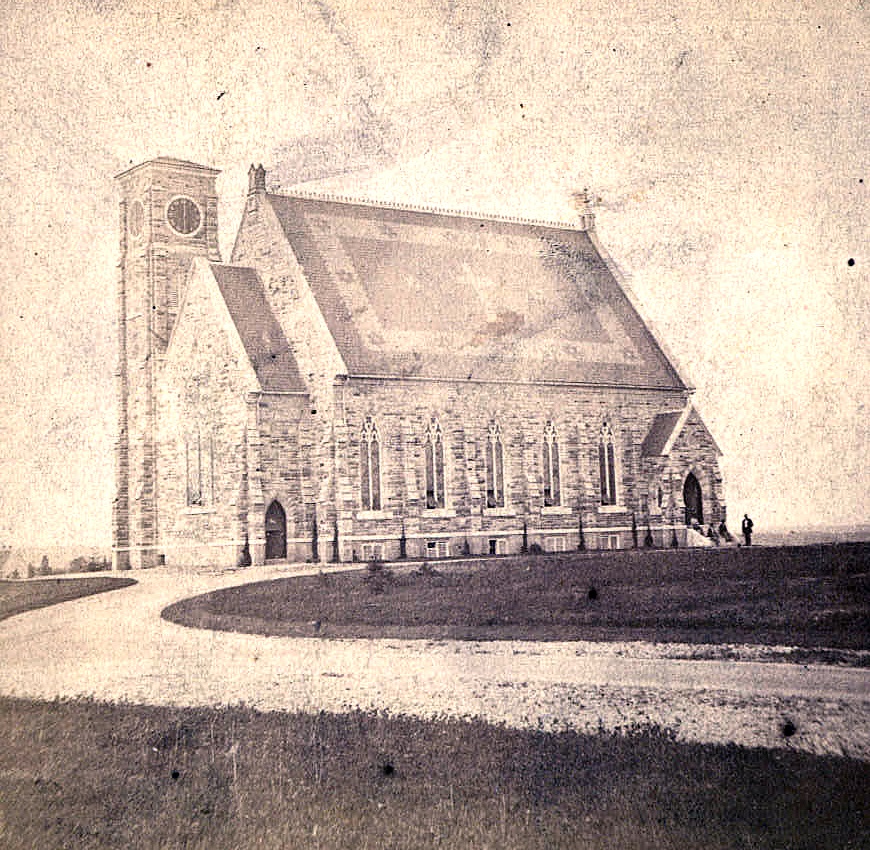
Home Chapel was constructed from quarried limestone onsite by the first Veteran residents to live at the Dayton Soldiers Home; the cornerstone was laid in 1868 and the building was dedicated in 1870. Today it is known as the Protestant Chapel, to distinguish it from the Catholic Chapel that also resides on campus.

The first chaplain at the Dayton Soldiers Home was Rev. William Earnshaw, a Civil War Veteran who ministered to the Union troops during the war while serving under Gen. George H. Thompson.2 Rev. Earnshaw was passionate in his service to his fellow Veterans, and functioned not only as chaplain, but also as the Home’s librarian, a leader of the Home’s temperance organizations, the president of the Monumental and Historical Society, and Commander-in-Chief of the Veterans organization The Grand Army of the Republic, in 1879-80.345 He continued to serve as Chaplain at the Soldiers Home until his death in 1885.
The age of this bible would place it in Home Chapel during the time of Chaplain Earnshaw’s tenure, and it is likely that he used it in his sermons to the thousands of Veterans who worshipped in the chapel through the years. Telltale color changes to the pages due to light exposure, and cracking along the binding in a certain section of the bible suggests that the bible was frequently opened to the Book of Job, chapters 31 – 33. The title stamped onto the cover reads “National Military Home” and the inside title page mentions that it was published in 1861 by the New York American Bible Society.
While the bible was the first object placed into the collection, it will be joined by countless others that will help tell the VA story.
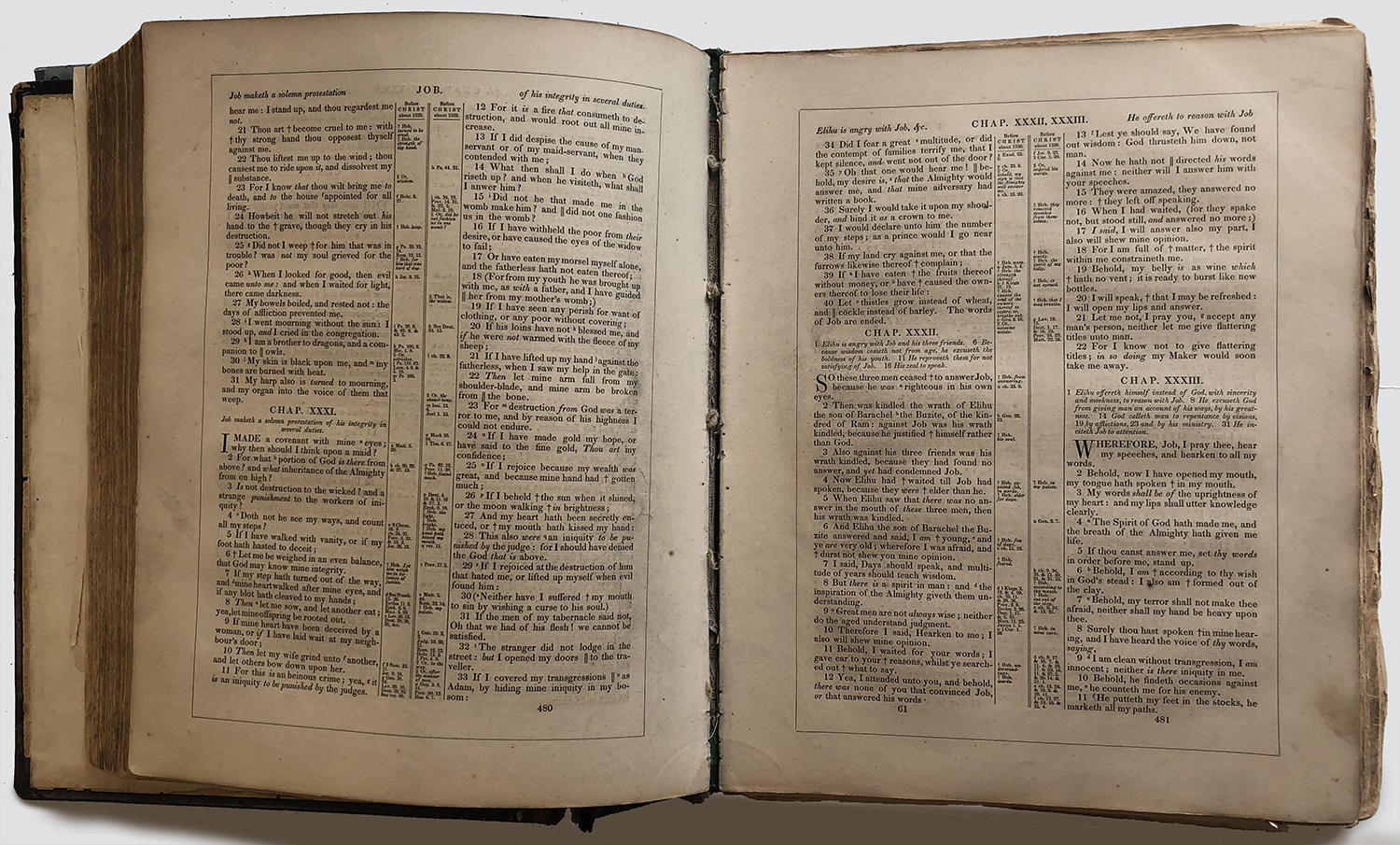 Section of the bible (Book of Job, Chapters 31-33) that appears frequently referenced. (NVAHC)
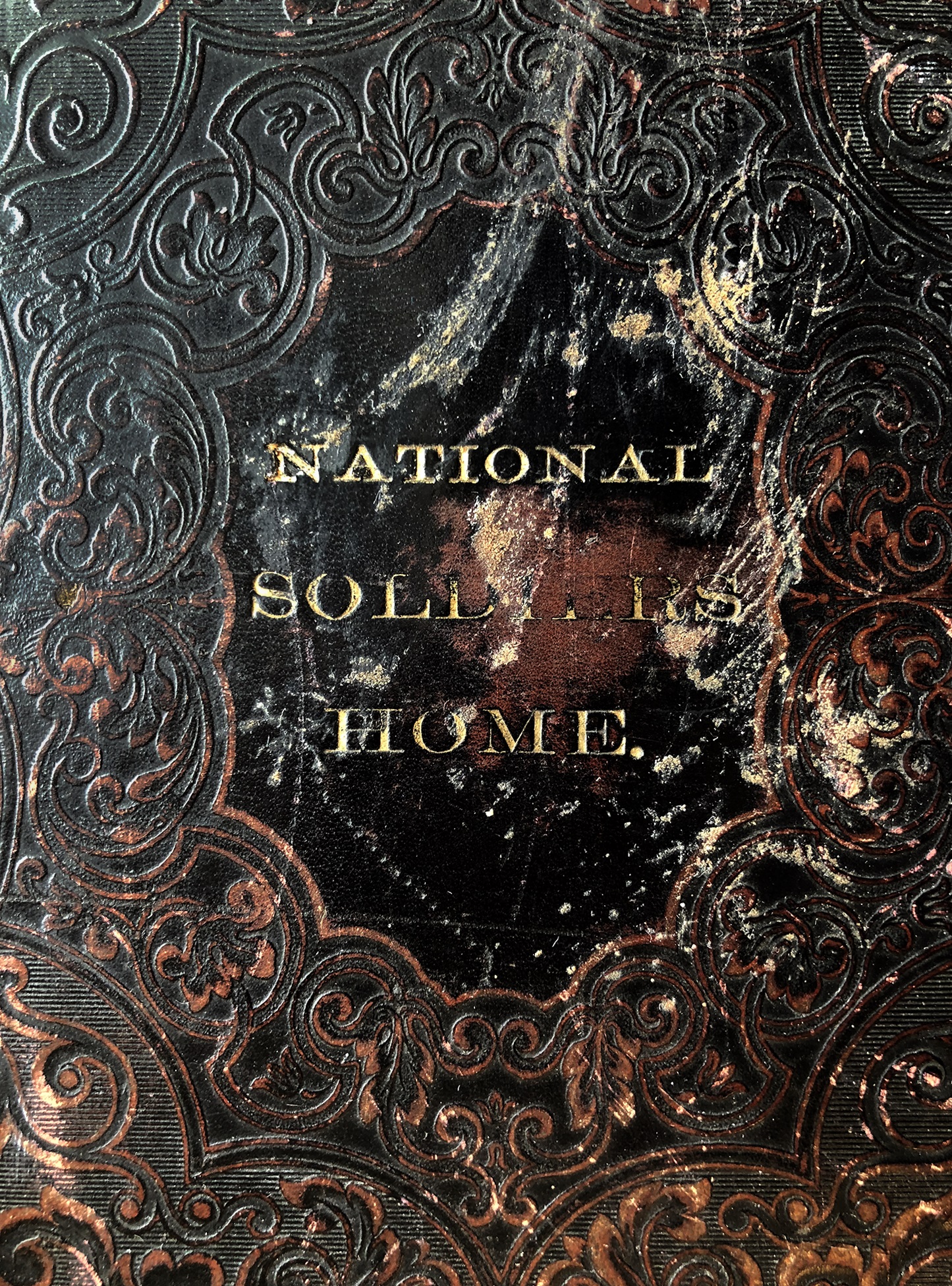 Close-up image of the title stamp on the cover of the bible, identifying it as belonging to the National Soldiers Home. (NVAHC)
Footnotes
- History of the National Home for Disabled Volunteer Soldiers: With a Complete Guide-book to the Central Home at Dayton, Ohio; by J.C. Gobrecht, 1875; p. 98. ↩︎
- History of the National Home for Disabled Volunteer Soldiers: With a Complete Guide-book to the Central Home at Dayton, Ohio; by J.C. Gobrecht, 1875; p. 236. ↩︎
- History of the National Home for Disabled Volunteer Soldiers: With a Complete Guide-book to the Central Home at Dayton, Ohio; by J.C. Gobrecht, 1875; p. 67, 147,129. ↩︎
- The story of the Chaplaincy, Veterans Administration Center, Dayton, Ohio, October 10, 1950.. Dayton History Books Online. ↩︎
- Records of Members of the Grand Army of the Republic, by William H. Ward, 1886, p. 11. ↩︎
Share this story
Related Stories

Featured Stories
From Double Agent to Veteran Advocate: The Remarkable Journey of Caleb Bruen
In 1959, Revolutionary War soldier Caleb Bruen was lying at rest in the cemetery of the First Presbyterian Church (also known as the Old Presbyterian Church) in Newark, New Jersey. However, his resting place was facing a disturbance. According to reporting at that time by Nat Brandt in Newark’s Star-Ledger newspaper, church leadership was planning to convert the historic Broad Street cemetery into a parking lot, and reinter those resting there in a new mass plot.
Featured Stories
Veterans’ Horticultural Pursuits at the Dayton National Home for Disabled Volunteer Soldiers
Veterans living at the Dayton, Ohio, National Home for Disabled Volunteer Soldiers (NHDVS) played an integral role in beautifying the 578-acre campus. Veterans reaped benefits from working on the land including improved physical and mental health, social cohesion, and occupational skills. Most importantly, tending gardens provided Veterans with a sense of purpose and pride for enhancing their facility’s appearance.
Featured Stories
The 3rd Massachusetts Cavalry Monument in the Year of the Fire Horse
In the southwest quadrant of Winchester National Cemetery, located in the town of the same name in Virginia, sits an impressive monument to the 3rd Massachusetts Cavalry that pays tribute to both man and beast. The monument is adorned with a bas-relief of a horse’s head, wild-eyed and straining at its bridle. As February 2026 marked the start of the Lunar New Year and the Year of the Horse, this is an opportune time to explore the history of the regiment and its monument. According to Chinese astrology, the horse is hard-working, agreeable, and courageous, although it also chafes at being controlled by others, something the men of the 3rd Massachusetts Cavalry experienced firsthand. Stated one soldier, “The taming of wild animals was something I did not dream of when I enlisted in '62.”