
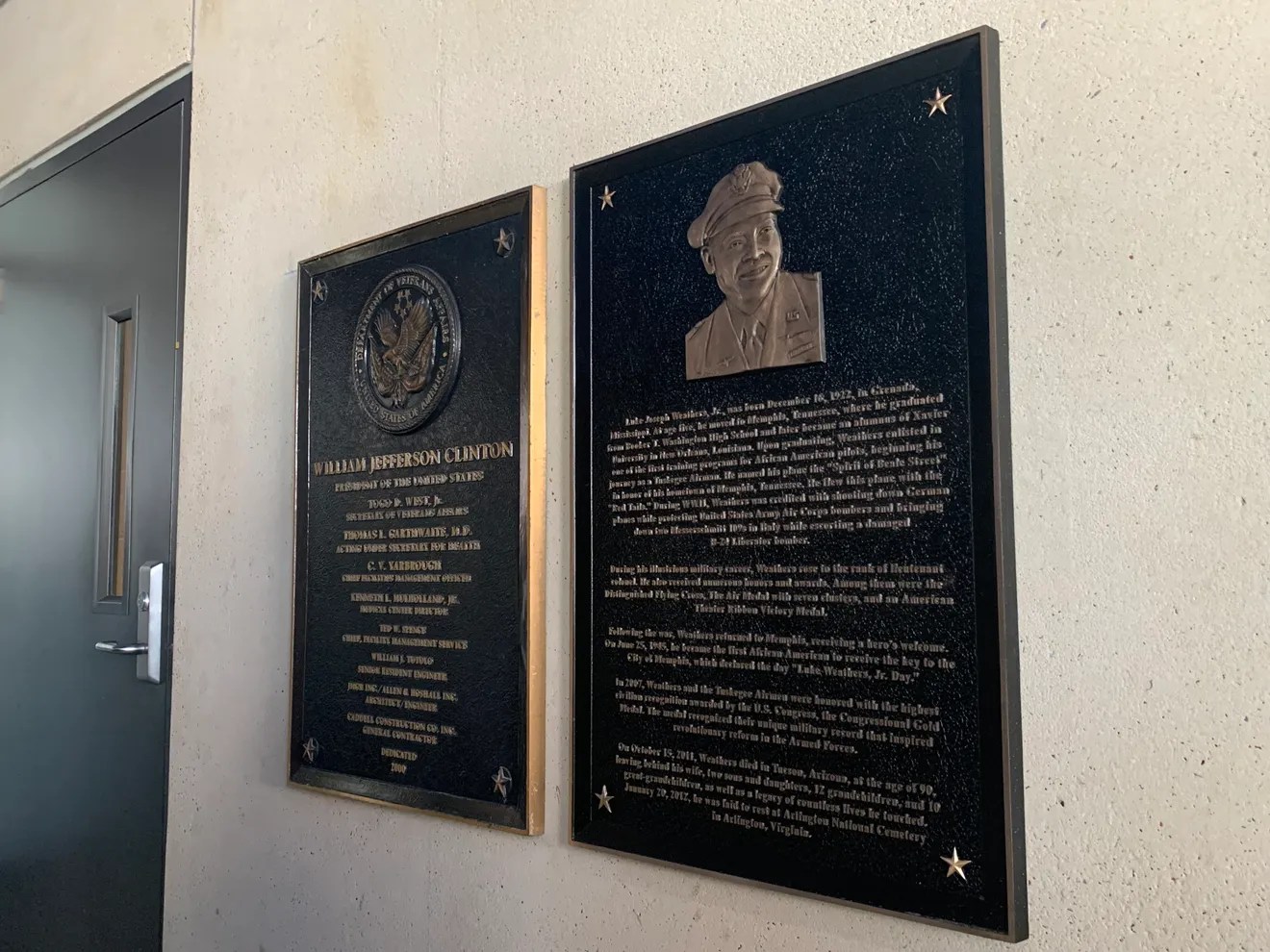
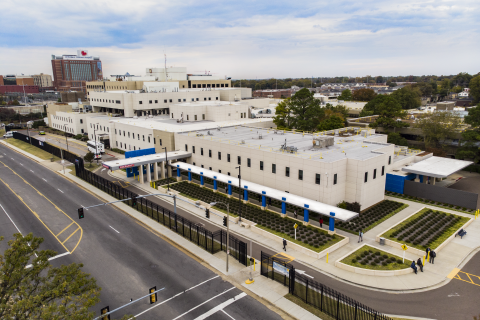
The Memphis VA Medical Center is now officially known as the Lt. Col. Luke Weathers, Jr. VA Medical Center. A dedication ceremony to honor Lt. Col. Luke Weathers, Jr., took place on July 24, 2023.
Lt. Col. Luke Weathers, Jr., a Memphis native and member of the heralded Tuskegee Airmen and Red Tails, was credited with shooting down numerous enemy aircraft while escorting B-24 bombers over Italy in 1944.
U.S. Rep. Steve Cohen of Tennessee introduced the bill, which was passed into law December 20, 2022.
“On behalf of our leaders and staff, we are honored to have this medical center named in honor and recognition of such a deserving hero,” said Joseph P. Vaughn, executive director, Lt. Col. Luke Weathers, Jr. VA Medical Center.
Luke Joseph Weathers, Jr., was born December 16, 1922, in Grenada, Mississippi. At age five, he moved to Memphis, Tennessee, where he graduated from Booker T. Washington High School and later became an alumnus of Xavier University in New Orleans, Louisiana. Upon graduating, Weathers enlisted in one of the first training programs for African American pilots, beginning his journey as a Tuskegee Airman. He named his plane the “Spirit of Beale Street” in honor of his hometown of Memphis, Tennessee. He flew this plane with the “Red Tails.” During WWII, Weathers was credited with shooting down German planes while protecting United States Army Air Corps bombers and bringing down two Messerschmitt 109s in Italy while escorting a damaged B–24 Liberator bomber.
During his illustrious military career, Weathers rose to the rank of lieutenant colonel. He also received numerous honors and awards. Among them were the Distinguished Flying Cross, The Air Medal with seven clusters, and an American Theater Ribbon Victory Medal.
Following the war, Weathers returned to Memphis, receiving a hero’s welcome. On June 25, 1945, he became the first African American to receive the key to the City of Memphis, which declared the day “Luke Weathers, Jr. Day.”
In 1965, after transferring from his Federal Aviation Administration (FAA) position in Anchorage, Alaska, Weathers became the first African American Air Traffic Controller in Memphis, Tennessee. He later held positions with the FAA in Atlanta, Georgia, and the District of Columbia, where he eventually retired in 1985 after serving as a reservist in the military for 23 years.
In 2007, Weathers and the Tuskegee Airmen were honored with the highest civilian recognition awarded by the U.S. Congress, the Congressional Gold Medal. The medal recognized their unique military record that inspired revolutionary reform in the Armed Forces.
On October 15, 2011, Weathers died in Tucson, Arizona, at the age of 90, leaving behind his wife, two sons and daughters, 12 grandchildren, and 10 great-grandchildren, as well as a legacy of countless lives he touched. January 20, 2012, he was laid to rest at Arlington National Cemetery in Arlington, Virginia.
By Staff at the Lt. Col. Luke Weathers, Jr. VAMC
Share this story
Related Stories
Featured Stories
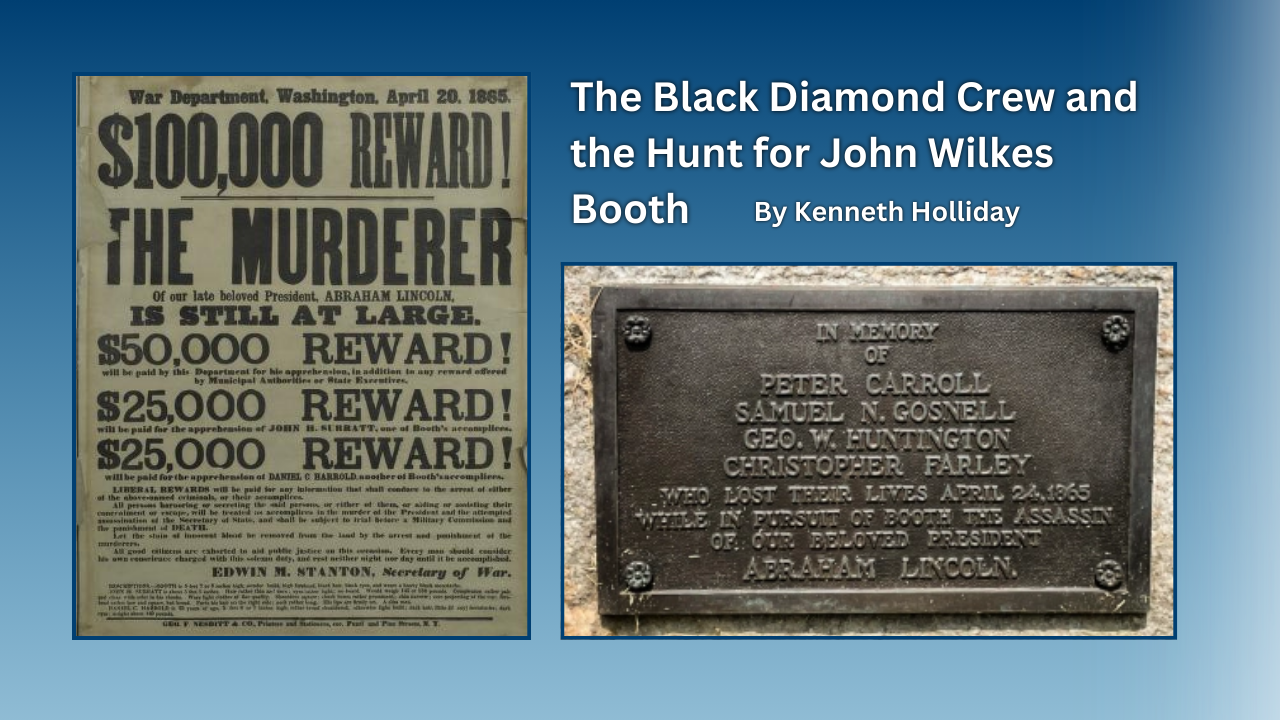
During the late evening, early hours of April 23-24, 1865, the Black Diamond, a ship on the Potomac River searching for President Abraham Lincoln's assassin John Wilkes Booth collided with another ship, the USS Massachusetts. The incident was a terrible accident during the frantic mission to locate the fleeing Booth before he escaped into Virginia. Unfortunately many lives were lost, including four civilians who had been summoned from a local fire department by the Army. For their assistance during this military operation, all four were buried in the Alexandria National Cemetery, some of the few civilians to receive that honor.
Featured Stories
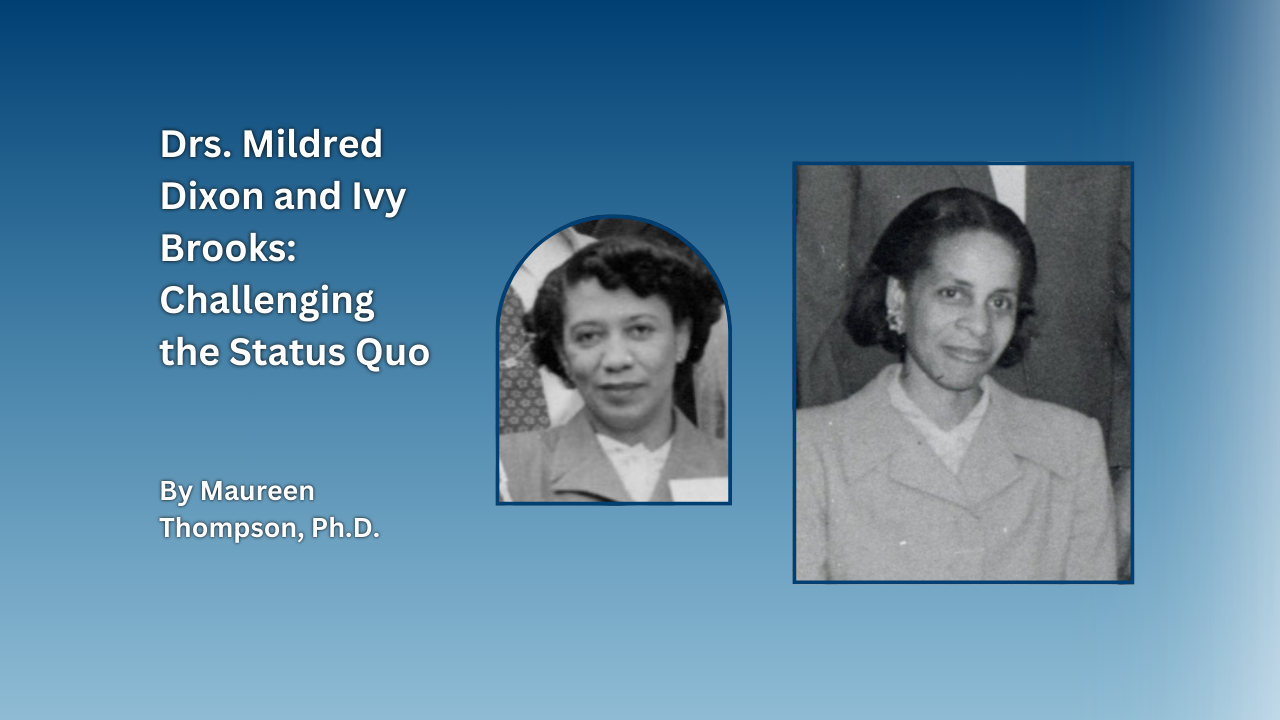
In the mid-twentieth century, the lives of Dr. Ivy Brooks and Mildred Dixon, two trailblazing Black women physicians, converged at the Tuskegee, Alabama, VA Medical Center. Doctor's Ivy Roach Brooks and Mildred Kelly Dixon shared much in common. Both women were born in 1916 in the northeastern United States and received training in East Orange, New Jersey. They both launched careers in alternate medical professions before entering the fields of radiology and podiatry, respectively. Pioneering many “firsts” throughout their professional lives, both women faced and overcame the rampant racism and sexism of the era.
Featured Stories
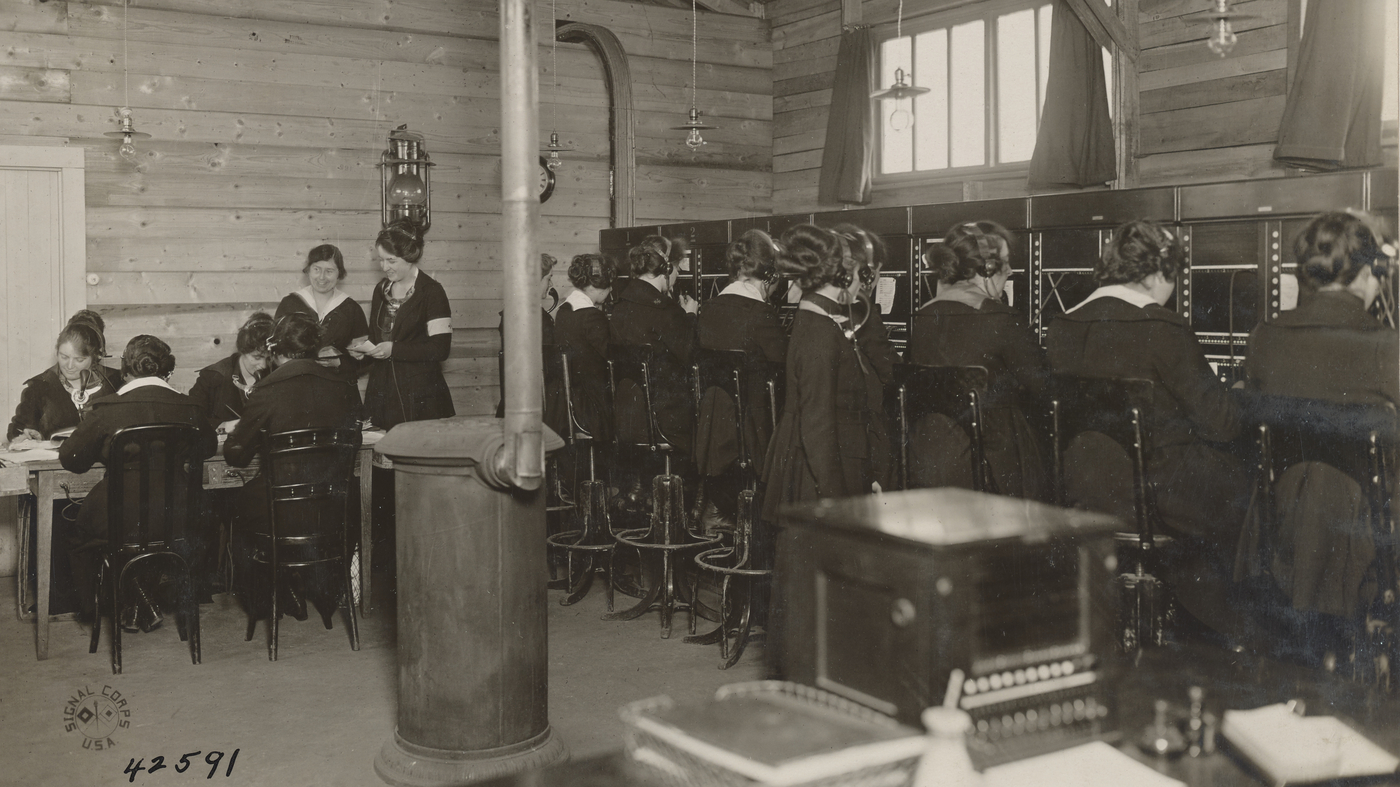
After the United States entered World War I in 1917, American Expeditionary Force commander General John J. Pershing requested the recruitment of women telephone operators that were bi-lingual in English and French. Eventually 233 were selected out of over 10,000 applicants, and they served honorably through the war, earning the nickname of 'Hello Girls.'
However, their employment was not officially recognized as military service and therefore were neither honorably discharged, or eligible for the benefits other returning Veterans would receive. This kicked off a 60-year fight for 'Hello Girls' to receive legal Veteran status.